

Ms. Ashwini R. , Dr. Hemalatha Vidyashankar, Dr.
Radhika Krishanan
AshwiniR., Dr. Radhika Krishnan, Dr.HemalathaVidyashankar
Aim-To assess the on road visual acuity of heavy vehicle drivers
Background-Driving is inarguably a highly visual task it affects driver safety, performance, influences the reaction time while making critical decisions. Studies suggests most road accidents occur due to fault of drivers reduced visual acuity being an important cause
Methods-We conducted a camp based screening of 553 on duty truck drivers, between ages of 24 to 69 years and assessed the presenting visual acuity (Snellen), BCVA & causes for decreased vision
Results– Nearly 1 in 5 drivers had an on road acuity <6/12 in the better eye; refractive errors were the leading cause of decreased vision (82%), followed by cataract (9%), retinal problems (6%), amblyopia (2%), or other causes (1%). There was a staggering lack of compliance with previously prescribed glasses & 86% of these patients did not wear glasses while driving
Conclusion-On road visual acuity can be considerably lower than BCVA. Reduced vision while driving is a risk for the driver & people on the road & there is a strong need for guidelines on using optimum refractive correction while driving
Aim-To assess the on road visual acuity of heavy vehicle drivers.
Introduction:
We as a nation have a transport industry that caters to the need of 1.2 billion Indians. In 2007, the transport sector contributed about 5.5 percent to the nation’s GDP, with road transportation contributing the lion’s share. Roads are the dominant mode of transportation in India today. They carry almost 90 percent of the country’s passenger traffic and 65 percent of its freight. Our highway network density is — at 0.66 km of highway per square kilometer of land – is similar to that of the United States (0.65) and much greater than China’s (0.16) or Brazil’s (0.20)1. However, most highways in India are narrow and congested with poor surface quality, and 40 percent of India’s villages do not have access to all-weather roads, while those in metropolitan centres are severely congested during the rush hours. Additional adverse conditions like driving after dark, rain, fog etc. makes it more challenging for the driver. In the year 2014 alone road accidents killed 141,526 persons and injured 477,7312.The causes for these are multiple, and include causes like disregarding police officers, stop sign, traffic signs etc. While decreased vision may not be the only factor involved in these, it is certainly an easily preventable factor.
Driving is a predominantly visual task. Vision affects the reaction time; thereby influences road safety. Vision parameters like visual acuity, contrast sensitivity, color vision, depth perception and visual field have a significant role in driving. The most commonly and easily tested visual function is visual acuity. Visual acuity is the resolving power of the eye, the lesser the visual acuity, worse is the vision. It is commonly denoted by the Snellen fraction. Visual acuity as a fraction compares the distance at which a patient is able to see an object, to the distance at which a person with normal vision would be able to see it. Most countries require a minimum visual acuity of 6/12 visual acuity in the better eye for issuing driving license.
According to International Council of Ophthalmology (ICO) guidelines, a minimum of 6/12 acuity in the better eye on a well-lighted stationary chart, is believed to be reasonable cut off, as it includes a safety margin for adverse conditions3.
The Royal College of Ophthalmologists (RCO) guidelines require a visual acuity, with corrective lenses if necessary, of at least 6/9 in the better eye and at least 6/12 in the worst eye, and an uncorrected visual acuity of at least 3/604.Vision regularly changes with age, this gradual change in vision is not noticed by many drivers, which makes periodic eye examination necessary.
| Visual Acuity Standards | Additional conditions | |
| Australia5 | Uncorrected VA ≥ 6/9 in the better eye, or ≤6/18 in either eye. | A conditional license may be issued where this is met with corrective lenses |
| South Africa3 | A minimum of 6/12 acuity in each eye | |
| New Zealand6 | Minimum combined visual acuity of 6/9.
Monocular vision (visual acuity in the worse eye of less than 6/60– Unfit to drive |
· wear prescribed lenses
· regular medical assessment- Yearly check up
|
| England7 | Visual acuity at least 6/7.5 in better eye atleast 6/60 in worse eye. | With corrective power not more than (+) 8 dioptres, or with contact lenses-no limit. |
| CANADA3 | 6/9 in worse eye but not less than 6/30 |
Table 1. Visual Acuity Guidelines forDriving Used In Some Countries
Methodology:
A camp based prospective study was conducted among the truck drivers in the city of Mumbai and suburban areas. All drivers and helper staff were registered for eye examination, but only drivers were included in the study. An informed consent was taken for participation in the study.
1106eyes of heavy vehicle 553 drivers were examined between the age groups of 24 to 69 years. Eye examination camps were conducted in truck drivers work sites. A team of ophthalmologists, optometrists and non-clinical staff, enrolled and examined enrolled and examined the drivers on duty.
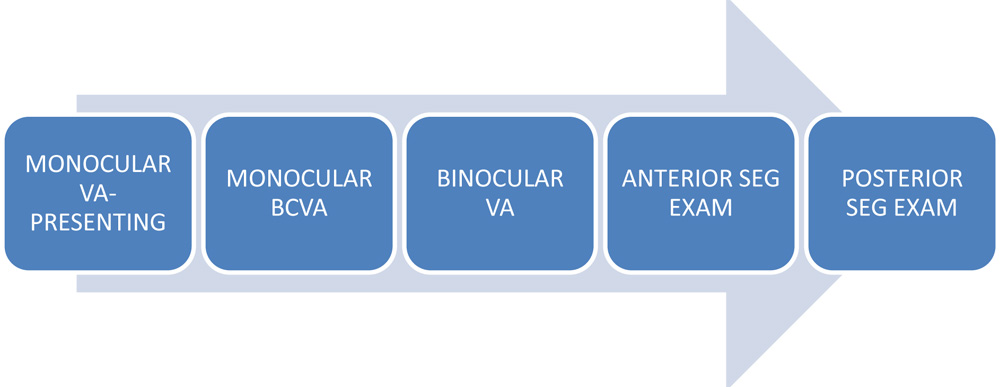
Visual acuity both with and without glasses was checked using Snellen charts at 6 meter distance, refraction was done, the presenting visual acuity (Snellen), BCVA& causes for decreased vision were noted. Any previous history of glasses, compliance with previously prescribed glasses, squint, eye surgeries, relevant medical history, trauma etc. was recorded. Glasses were prescribed to those who needed. Anterior segment examination with a hand held slit lamp and fundus examination was done with a direct ophthalmoscope in patients where vision improvement was not noted with glasses, dilated examination was done whenever possible.
Record was maintained of the visual acuity with which the patient presented and the compliance with glasses. This data was recorded and analyzed. All patients in need of further management were referred to the base hospital.
RESULTS:
We found that 108 patients (19.5%) presented with a visual acuity of <6/12 in the better eye, of these 82% were corrected to at least 6/9 using only refractive correction. Of these the percentage of patients with previous history of glasses: 36.15%
Cataract was the 2nd major cause of decreased visual acuity (9%) PSC 2% nuclear and cortical cataract 7%, followed by retinal problems (6%)-Myopic macular degeneration, diabetic maculopathy, AMD being more common, amblyopia(2%) particularly strabismic and anisometropic, or other causes (1%, including PCO, corneal opacity etc.)
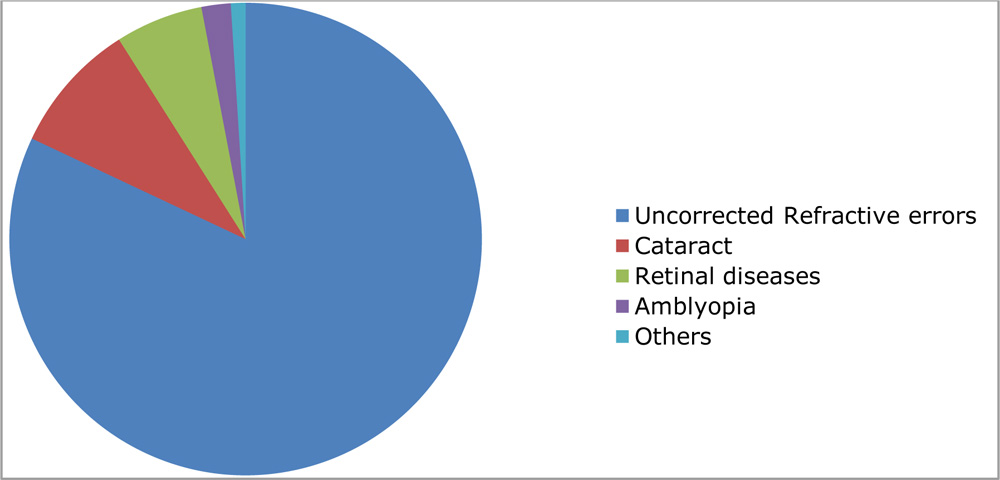
Figure 1. Causes of Decreased Visual Acuity
The average age was: 38.12yrs
The percentage patients with a unilateral visual acuity between 6/60 to PL: 2.2%
There was a staggering lack of compliance with previously prescribed glasses & 86% of these patients did not wear glasses while driving.
The main reasons for noncompliance with glasses included, Perceived as being unnecessary, discomfort, costly, cosmetic, others.
Conclusion:
1 out of every 5 truck drivers was found have lower visual acuity while driving, according to the visual standards used in most countries. The visual acuity of most of these patients was considerably improved by the use of glasses alone. Driving as a daily task was carried out with lower vision routinely and the on road visual acuity was lower than BCVA.
We also came across patients driving with a visual acuity of no light perception in one eye, which seriously compromises the field of vision.
We also noticed that eye examination was not a part of license renewal or employment criterion. Also there was no mention of patients refractive state or correction needed in driving licenses, which made it easier for them to work without refractive correction. A person driving with a visual acuity of 6/12 is able to see at 6 meters a signboard which can be read by a normal vision person at 12, thereby decreasing the reaction time to 1/3rd of normal. A visual acuity of 6/12 implies that the person needs 2.5X to 3times more magnification than normal to see the same target. Drivers must come 3 times closer to the road sign to read it, which reduces the reaction time to1/3rd the normal. If an individual with 6/6 vision can read a sign at 50 metres, an individual with 6/12 vision – purely on the optics – will read the same sign under the same conditions at 25 metres; and a person with 6/18 at 17 metres approximately. If the individual is travelling at 50 kilometres per hour, the driver with 6/6 vision will have approximately 3.5 seconds to perceive and process information; the driver with 6/12 1.75 seconds; and the driver with 6/18 only a second. If the same driver travels at 100 kph, then the times will be halved8
Reduced vision while driving is a risk for the driver & people on the road & there is a strong need for guidelines on using optimum refractive correction while driving. With growing economy, a growth in the transport industry means more people seek driving as a means of employment. This warrants for designing a well-defined framework and guidelines for vision assessment for those who drive routinely.
We have noticed a strong need for well described guidelines for vision requirements and stringent rules for use of corrective lenses while driving. We used only visual acuity in this study for assessing the visual performance and we feel that there is a need to further examine the visual fields, contrast, stereopsis and colour vision as different parameters for assessing functional vision.
REFERENCES:
- Transport – India Transport Sector. http://web.worldbank.org/WBSITE/EXTERNAL/COUNTRIES/SOUTHASIAEXT/EXTSARREGTOPTRANSPORT/0,,contentMDK:20703625~menuPK:868822~pagePK:34004173~piPK:34003707~theSitePK:579598,00.html.
- Mohan D, Tiwari G, Bhalla K. Road safety in India status report. 2015:93. http://tripp.iitd.ernet.in/road_safety_in_India_status_report.pdf.
- International Council of Ophthalmology. VISION REQUIREMENTS for DRIVING SAFETY.; 2006. http://www.icoph.org/downloads/visionfordriving.pdf. Accessed October 15, 2016.
- The Royal College of Ophthalmologists. Driving and Vision.; 2013. https://www.rcophth.ac.uk/wp-content/uploads/2014/08/Focus-Summer-2013.pdf. Accessed October 15, 2016.
- Optometrists Association Australia – NSW/ACT Division Driver Vision Standards Assessing Fitness to Drive.
- 6 | NZ Transport Agency. https://www.nzta.govt.nz/resources/medical-aspects/6.html. Accessed October 13, 2016.
- Driving eyesight rules – GOV.UK. https://www.gov.uk/driving-eyesight-rules.
- Wesemann W, Taylor S, Carswell R. REGULATION OF VISION AND DRIVING IN EUROPE. ECOO POSITION Pap. 2009.
Acknowledgements:
We thank Sightsavers, India for supporting this Initiative.
We would also like to show our gratitude to the staff of AdityaJyot Foundation for Twinkling Little Eyes for their contribution.