Dr. Anjali Israni,A16307, Dr. Ankita Mulchandani, Dr. Shreya Shah,Dr. Satyam Gupta
INTRODUCTION
Periocular capillary hemangiomas are common benign vascular tumors seen in children. Histologically, they are characterized by proliferating endothelial cells. They generally present within a few weeks after birth and undergo a rapid proliferating phase, followed by a plateau period, and regress after a few years into an involution phase.
The clinical course can be variable. Demographically, these cases occur commonly among females and do not vary by race, ethnicity, or geographic location.1-4
Various classifications have been provided but regardless of the method of classification, hemangiomas can present at any single location or a combination of locations within the periocular region1-3
Indications for intervention include rapidly enlarging lesions, obstruction of the visual axis, significant induced astigmatism, and cosmetic concerns.4-6
The various modalities for management are intralesional steroids, oral propanolol, interferon alpha, surgical excision etc.7-10
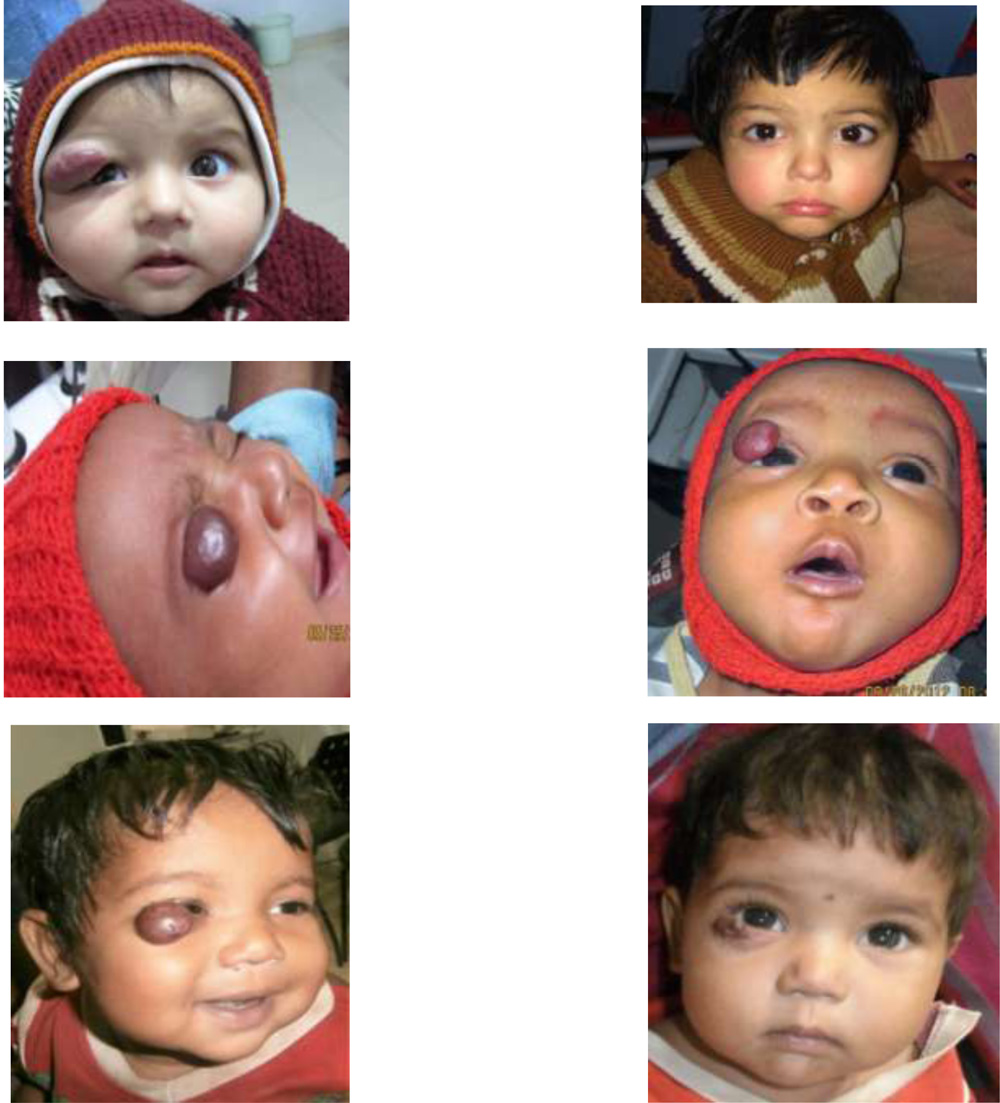
Here we present a short case series of periocular capillary hemangiomas which were treated with different modalities and our experience with them.
AIM:
To present a case series on the management options for capillary hemangiomas involving the eyelids.
METHODS:
This is a retrospective review of clinically diagnosed capillary hemangioma cases involving the periocular region treated our eye institution. The patients were subjected to visual acuity measurement with symbol charts in case of young children and prefrential looking tests in case of infants. External eye examination was done to note the size of the hemangioma followed by ultrasound and magnetic resonance imaging in a few cases. The patients were randomly selected as to whether they would be managed conservatively or with intralesional steriods. However in advanced cases surgical excision was done. The clinical progression, modalities of treatment, and treatment outcomes were studied.
Results: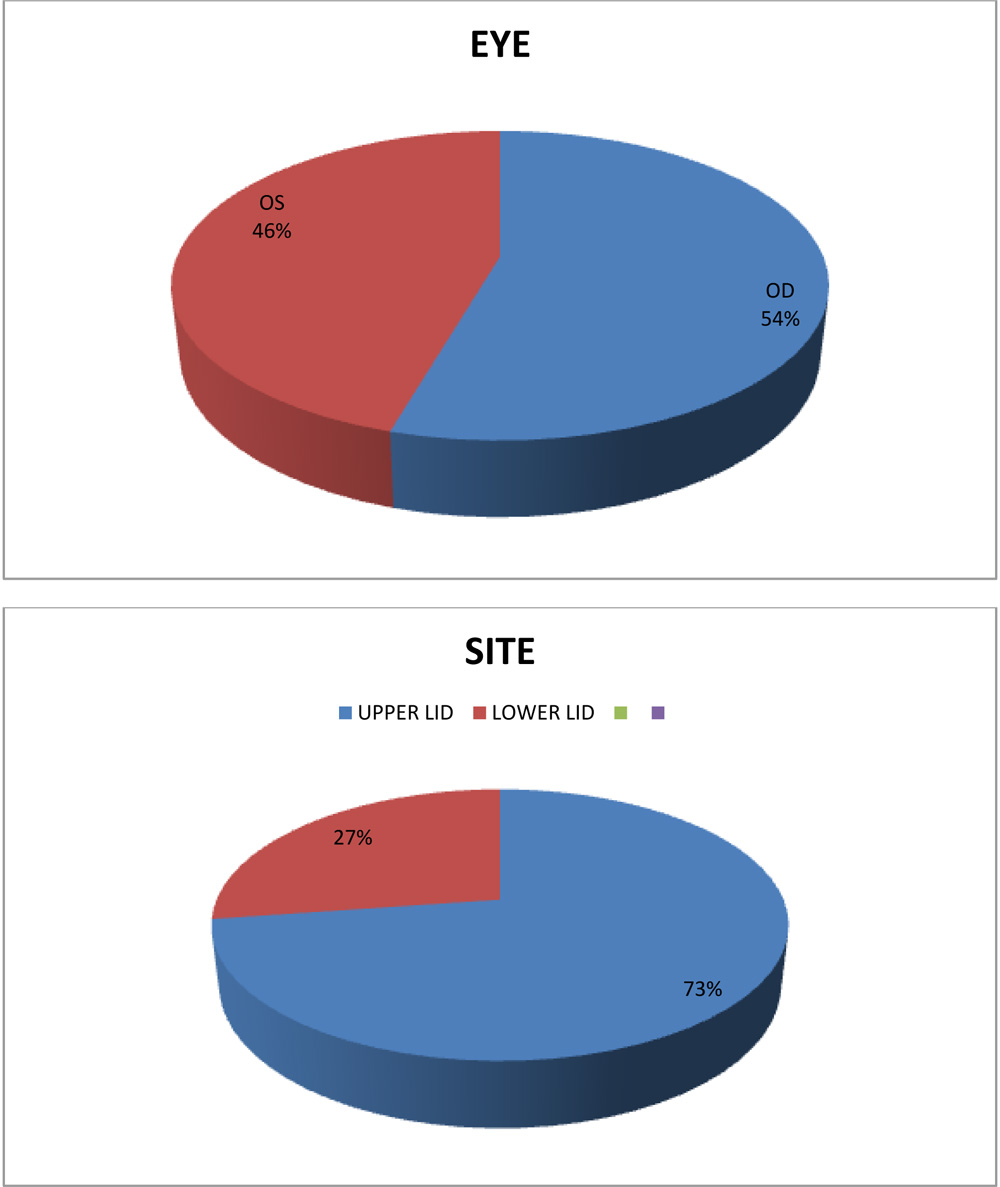
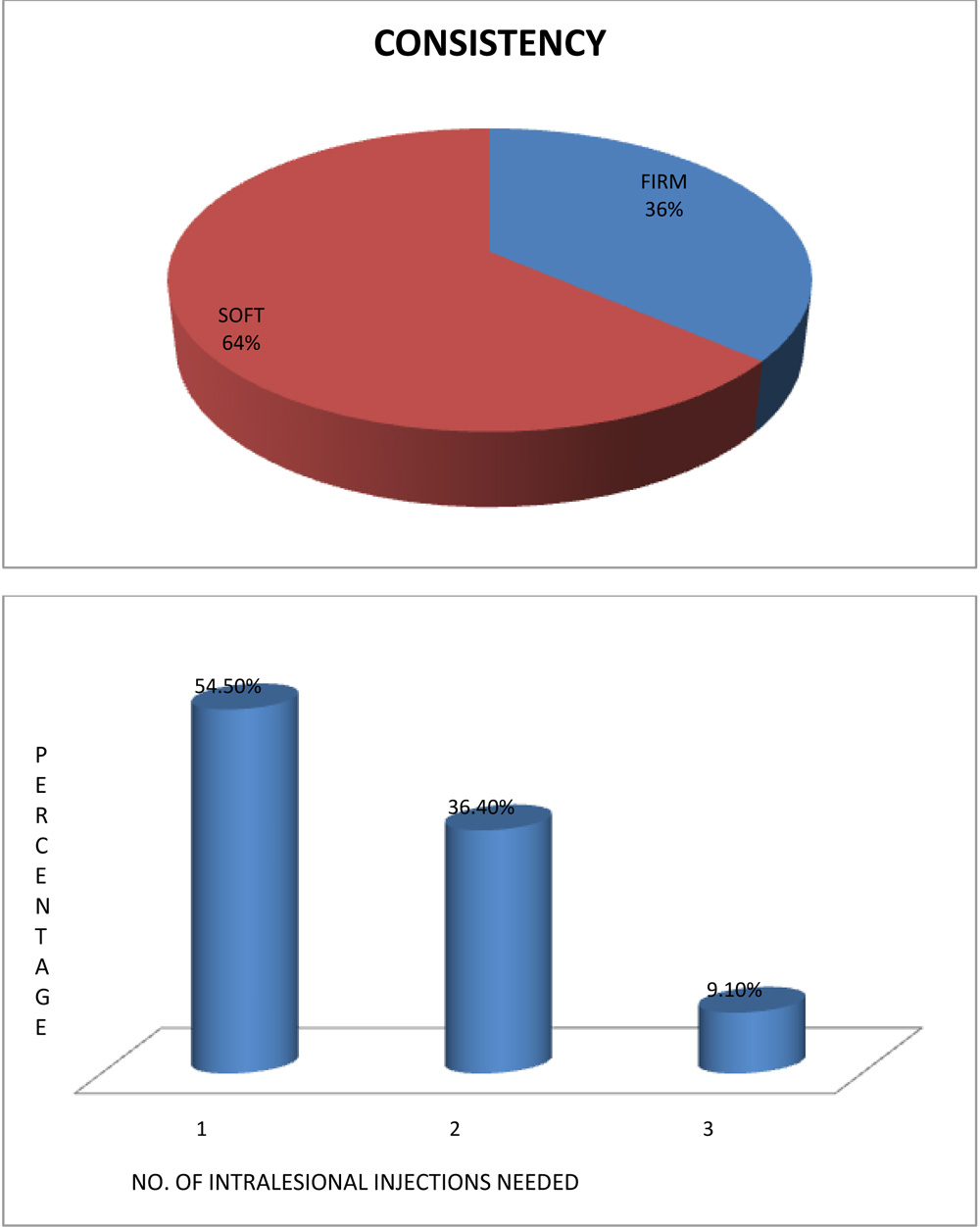
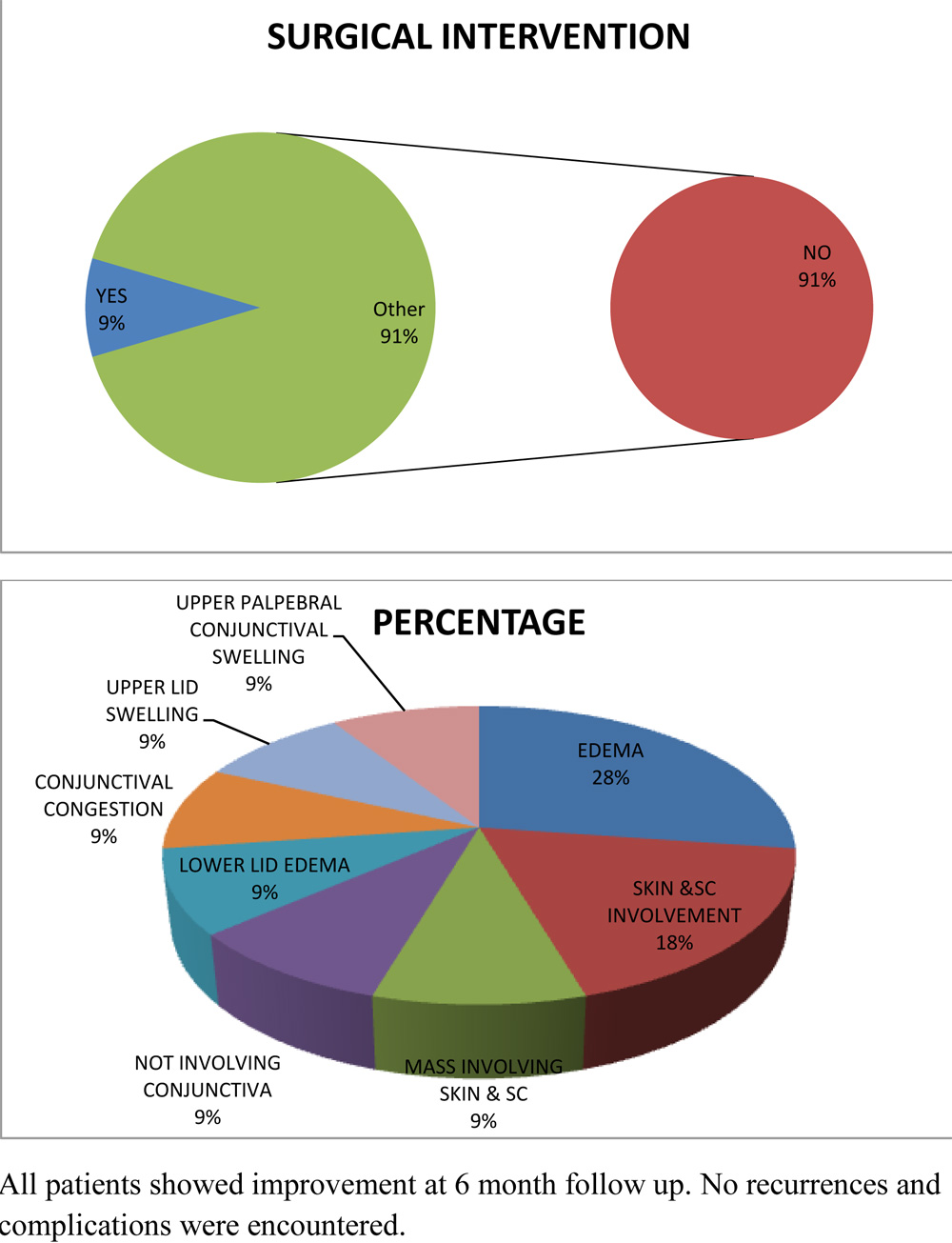 All patients showed improvement at 6 month follow up. No recurrences and complications were encountered.
DISCUSSION:
Capillary hemangiomas represent an abnormal growth of blood vessels characterized by endothelial proliferation. They expand progressively in weeks to months, then involute over the years.1–9,11. Formerly dense endotheliomatous lesions during the growth phase become replaced by fewer endothelial channels, increased collagen deposition, and fat, as well as inflammatory cells, as lesions regress.11
Intralesional steroid injection was the most common form of treatment in the past for capillary hemangioma.5 In his study of 13 patients, Weiss observed a reduction in astigmatism of up to 63% within 1 to 14 months after injection.7 In this series, triamcinolone with betamethasone was used as an additional treatment in a case unresponsive to oral prednisolone.
Herlihy EP, et al.showed that patients treated with corticosteroid injection showed a biphasic
response, with an immediate steep decrease followed by a slow monophasic decline, paralleling propranolol-treated patients.13
In a study of 36 patients by Yifeng Ke, et al, 92% patients were cured after intralesional steroid injections.12
In their study of 17 patients, Glasman P, et al. showed that Propranolol produced a clinically significant reduction in the infants’ refractive error and anisometropia
References:
1. Haik B, Karcioglu Z, Gordon RA, Pechous BP. Capillary hemangioma (infantile periocular hemangioma) Surv Ophthalmol. 1994;38:399–426.
2. Schwartz SR, Blei F, Ceisler E, et al. Risk factors for amblyopia in children with periocular capillary hemangiomas of the eyelid and orbit. J AAPOS. 2006;10:262–268.
3. Frank RC, Cowan BJ, Harrop AR, et al. Visual development in infants: visual complications of periocular hemangiomas. J Plast Reconstr Aesthet Surg. 2010;63:1–8.
4. Tambe K, Munshi V, Dewsberry C, et al. Relationship of infantile periocular hemangioma depth to growth and regression pattern. J AAPOS. 2009;13:567–570.
5. Wasserman BN, Medow NB, Homa-Palladino M, Hoehn ME. Treatment of periocular capillary hemangiomas. J AAPOS. 2004;8:175–181.
6. Hastings MM, Milot J, Barsoum-Homsy M, et al. Recombinant interferon alfa-2b in the treatment of vision threatening capillary hemangiomas in childhood. J Pediatr Ophthalmol Strabismus. 1997;1:226–230.
7. Weiss AH, Kelly JP. Reappraisal of astigmatism induced by periocular capillary hemangioma and treatment with intralesional corticosteroid injection. Ophthalmology.2008;115:390–397.
8. Wilson MW, Hoehn ME, Haik BG, et al. Low-dose cyclophosphamide and interferon alfa 2a for the treatment of capillary hemangioma of the orbit.Ophthalmology. 2007;114:1007–1011.
9. Fawcett SL, Grant I, Hall PN, et al. Vincristine as a treatment for large hemangioma threatening vital functions. Br J Plast Surg. 2004;57:168–171.
10. Elflein HM, Stoffelns BM, Pitz S. Laser and other treatment options in the therapy of infantile capillary eyelid and periorbital hemangiomas: an overview. Med Laser Appl. 2010;25:242–249.
11. Rootman J. Diseases of the Orbit. Philadelphia: JB Lippincott; 1988. pp. 539–543.
12. Yifeng Ke, et al. The value of colour Doppler imaging and intralesional steroid injection in pediatric orbital capillary hemangioma. J Chin Med Assoc. 2014 May;77(5):258-64.
13. Herlihy EP, Kelly JP, Sidbury R, Perkins JA, Weiss AH.Visual acuity and astigmatism in periocular infantile hemangiomas treated with oral beta-blocker versus intralesional corticosteroid injection.J AAPOS. 2016 Feb;20(1):30-3.
14. Glasman P, Chandna A, Nayak H, Mangat S, Kaye S.Propranolol and periocular capillary hemangiomas: assessment of refractiveeffect.J Pediatr Ophthalmol Strabismus. 2014 May-Jun;51(3):165-70.
Images:
Pre-Intervention Post-Intervention