

Dr. Ravneet Chadha,
Dr. Vijay Shetty, Dr. Suhas Haldipurkar, Dr.
Devendra Phalak
Chief author & presenting author-DrRavneetChadha
Co-authors – DrSuhasHaldipurkar
-Dr Vijay Shetty
Financial Disclosures
The authors have no financial interest or have received
any grant for this study
Introduction
Cataract surgery has become more of a refractive surgery and patients expectations for unaided visual outcome has increased.
Patients expect spectacle free vision for working at multiple distances (far, intermediate and near).
Difference in visual performance achieved post cataract surgery depend on optical principles and designs of IOL implanted.1
Apart from other parameters ,Higher order aberrations (HOA) are one of the important factor responsible for visual quality.
Increased higher order aberrations affect contrast sensitivity and optical image quality.2
Need For Study
Monofocal IOL’s is a prevalent technique in cataract patients.
Bilateral multifocal & trifocal IOL implantation prevalent method for pseudophakic spectacle independence.
Literature provides limited comparative data on optical quality outcomes in terms of aberration profile of these techniques(esp trifocal and extended range multifocal).
Purpose
Comparison of postoperative optical quality outcomes in eyes with monovision,multifocal,extended range multifocal & trifocal IOL.
Objectives
To compare in 4 groups 1 month postoperatively.
1.Higher order aberrations
2.Optical quality parameters
(Modulation transfer function (MTF), Strehls ratio)
STUDY POPULATION
Study population comprised of 20 patients of monovision,20 patients of multifocal implanted with Restore lens (+3.00 add),18 patients with trifocal lens(Physiol) and 10 patients with extended range multifocal(Symfony)
Methods
Inclusion criteria:
Patients who underwent bilateral cataract surgery with any of these procedure(monovision,multifocal,extended range multifocal & trifocal IOL)were included
Exclusion Criteria:
Patients excluded were:
– BCVA less than 6/9 and or N/6
– High ametropia
-History of previous ocular surgery or any active ocular disease
-Patients developing significant PCO
Study design:Prospective cohort study
Study site:Laxmi eye institute,Panvel,Maharashtra
Material & Methods
Parameters assessed 1 month postoperatively on I trace (HOYA) aberrometry were higher order aberrations of entire eye and internal optics in undilated (scan diameter 2mm)& dilated (scan diameter 4mm) conditions.
Higher order aberration analysed were
-Total HOA
-Coma
-Spherical
Optical quality parameters(Entire eye & internal optics) analysed were
-MTF at 5,15 & 25 cycles/degree
-Strehls ratio
RESULTS
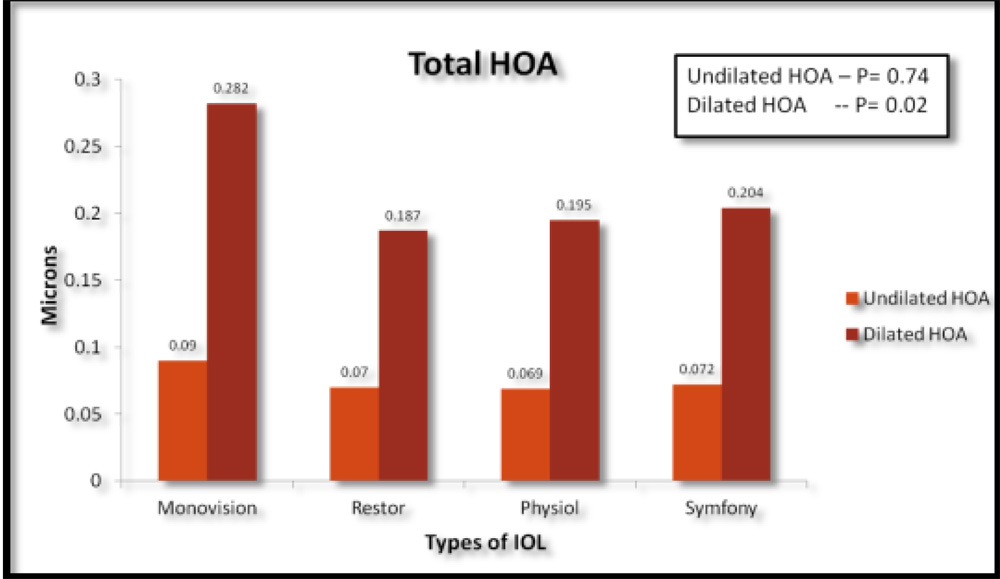
Fig1:No significant difference was seen in total HOA of entire eye in undilatedconditions.There was significant difference noticed in dilated conditions where monovision group showed greater HOA and restor group had lesser HOA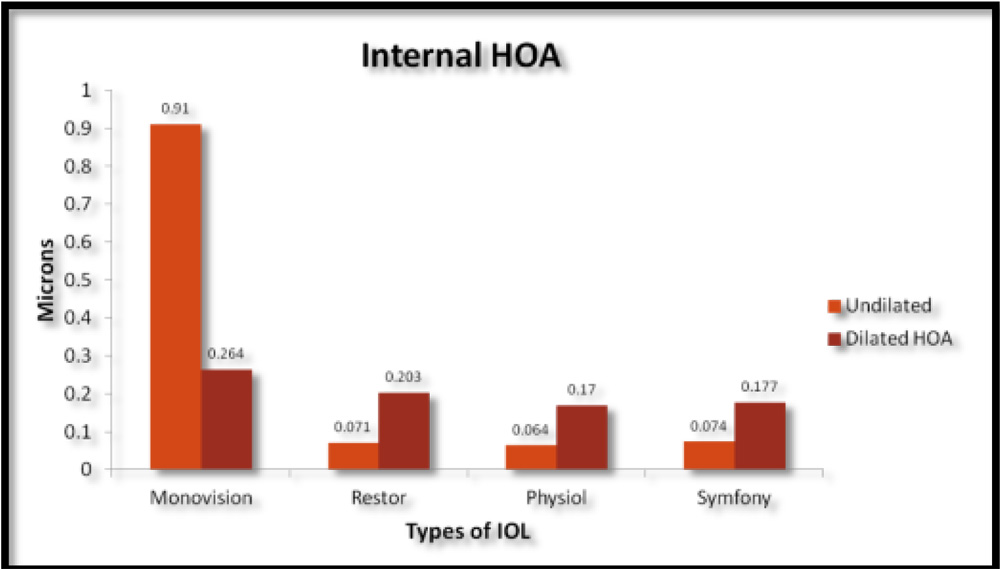
Fig2: No significant difference noted in dilated conditions whereas in UNdilated conditions there was significant difference with physiol showing lesser internal optics HOA
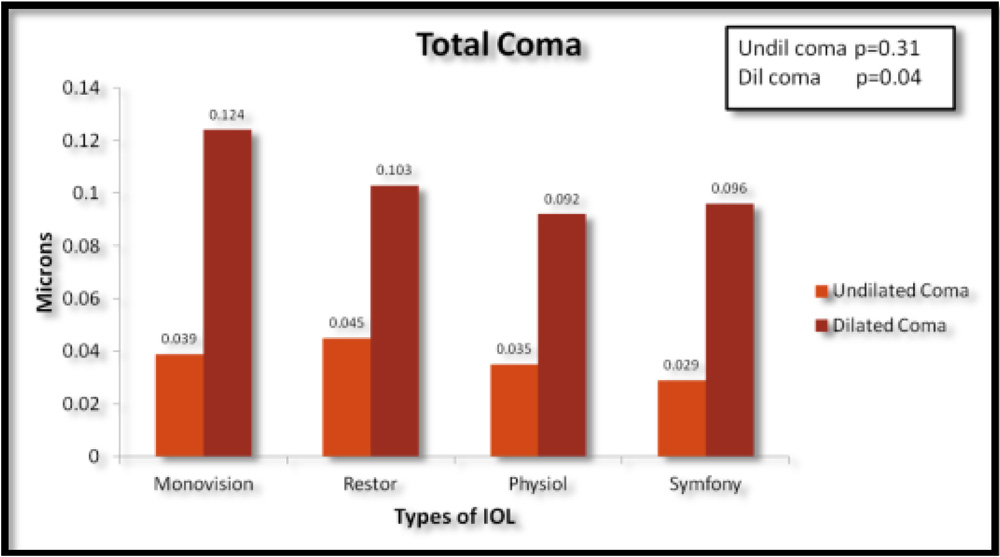
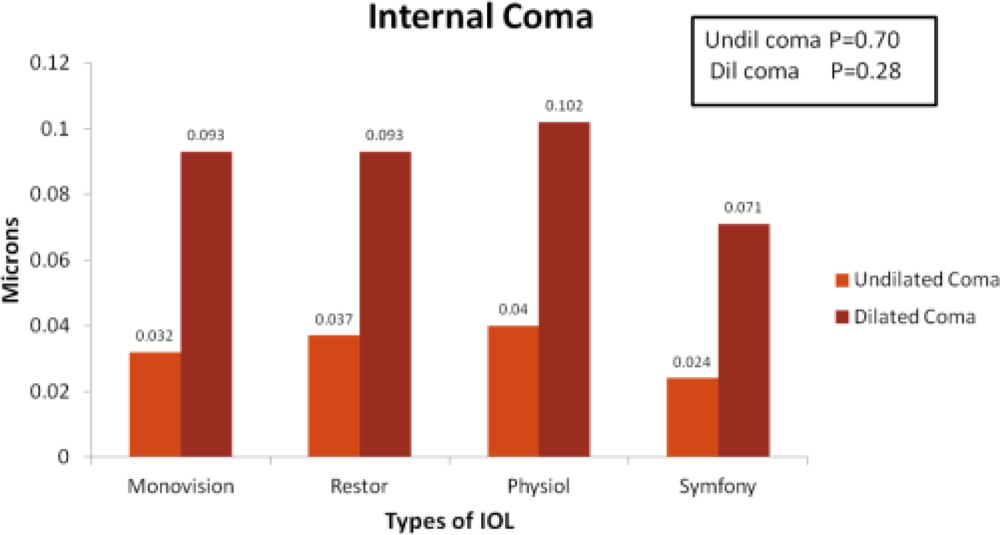
Fig 4 :There was no significant difference in internal optics coma in both undilated and dilated conditions among the 4 groups
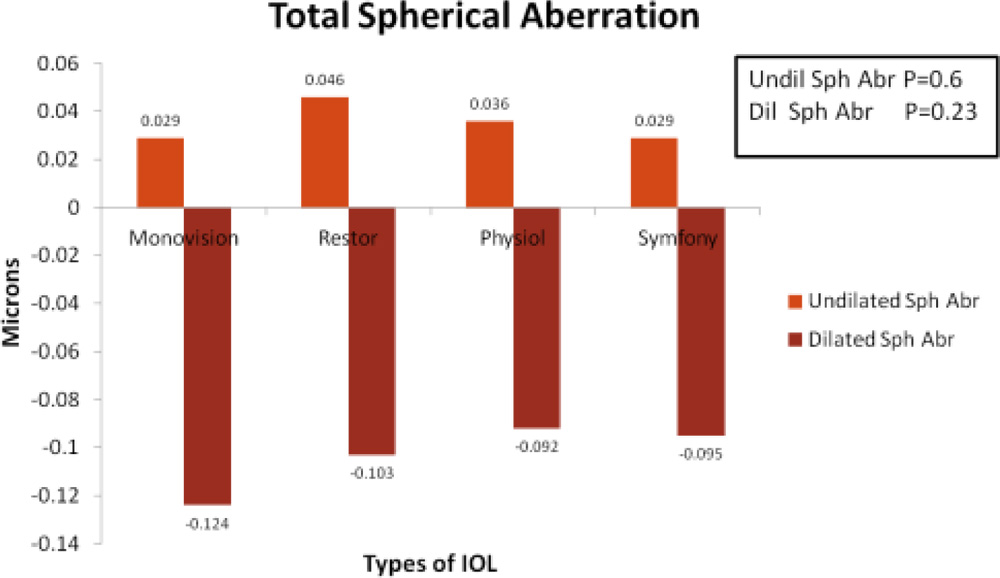
Fig 5:Entire eye spherical aberration showed no significant difference in both dilated and undilated conditions
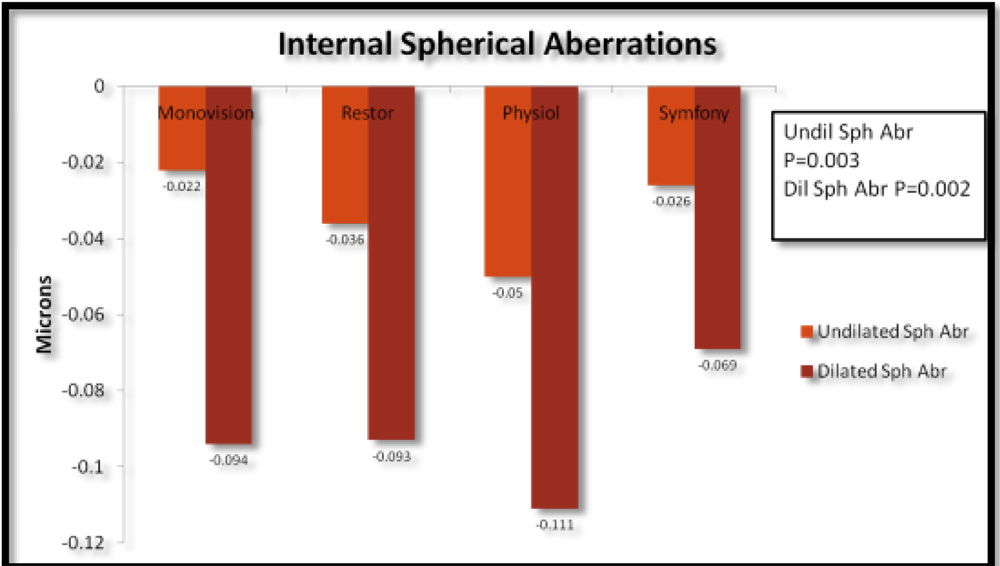
Fig 6: Internal optics spherical aberration showed significant difference in dilated as well as undilated conditions with more negative aberration in physiol group compared to others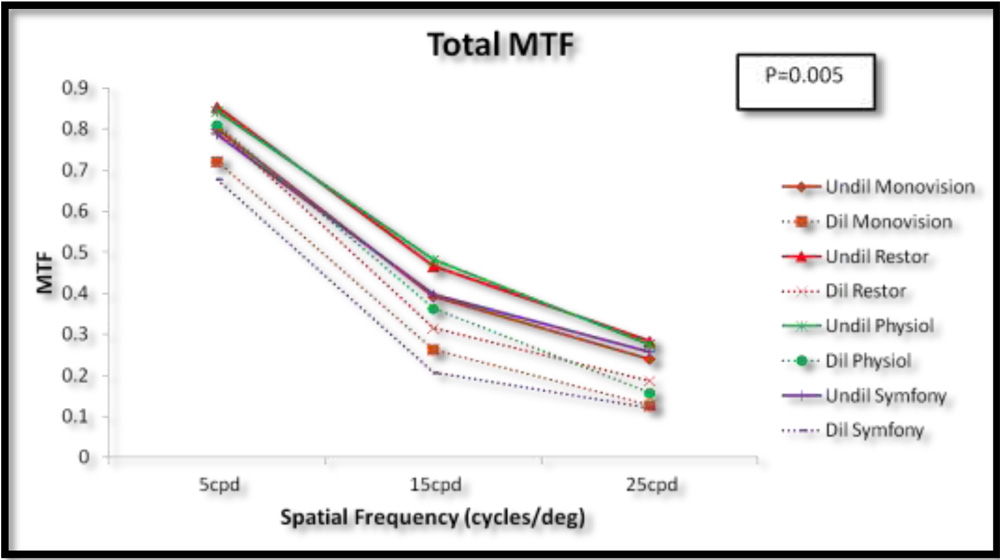
Fig 7:This graph shows the entire eye MTF at 5,15& 25 cycles per degree.The dotted lines represent dilated condition and solid lines represent undilatedstate.In dilated conditions all the groups had lesser MTF,whereas in undilated state physiol group had higher MTF followed by Restor group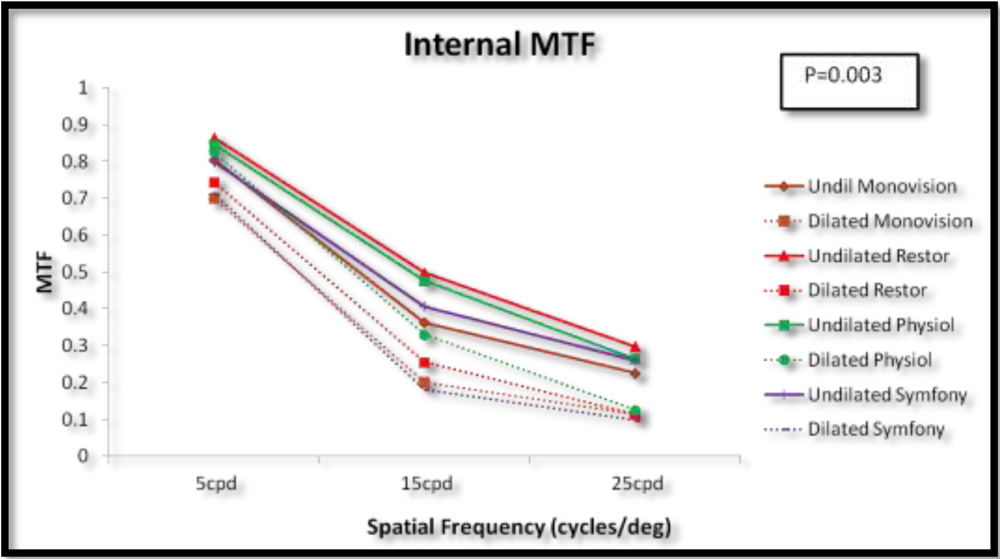
Discussion
No significant difference was noticed in undilated conditions in most of the aberrations.In dilated conditions physiol and symfony had lesser total and internal HOA,Coma was lesser in physiol group.MTF at all spatial frequencies was better in physiol followed by restor
Our results were similar to study done by Amy Shepphard et al3(REFERENCE NOT GIVEN BELOW)which showed that bilateralimplantation of trifocal IOL gave good standard of distance, near & intermediate visual acuity and better contrast and stereacuity and better aberration profile
Conclusion
Bilateral implantation of trifocal IOL is a good option for presbyopia correction post cataract surgery with lesser higher order aberrations Other options also perform well Studies with larger sample size are necessary to confirm our results and further evaluate long term efficacy of these approaches.
References:
1.Visual function and patient satisfaction: Comparison between bilateral diffractivemultifocal intraocular lenses and monovisionpseudophakia
Fuxiang Zhang, MD, Alan Sugar, MD, Gordon Jacobsen, MS, Melissa Collins, COA . J cataract refract surg 2014
2.Optical analysis, reading performance ,and quality-of-life evaluation after implantation of a diffractive multifocal intraocular lens Jorge L. Ali_o, MD, PhD, Ana B. Plaza-Puche, MSc, David P. Pi~nero, PhD, FranciscAmparo, MD,Ram_onJim_enez, MSc, Jose L. Rodríguez-Prats, MD, Jaime Javaloy, MD, Vanessa Pongo, MD. J Cataract refract surg 2011